Souk El Had
Agadir’s great market, the entire urban environment digitally reconstructed and 3D-printed as a model you can assemble, transport, exhibit and update.
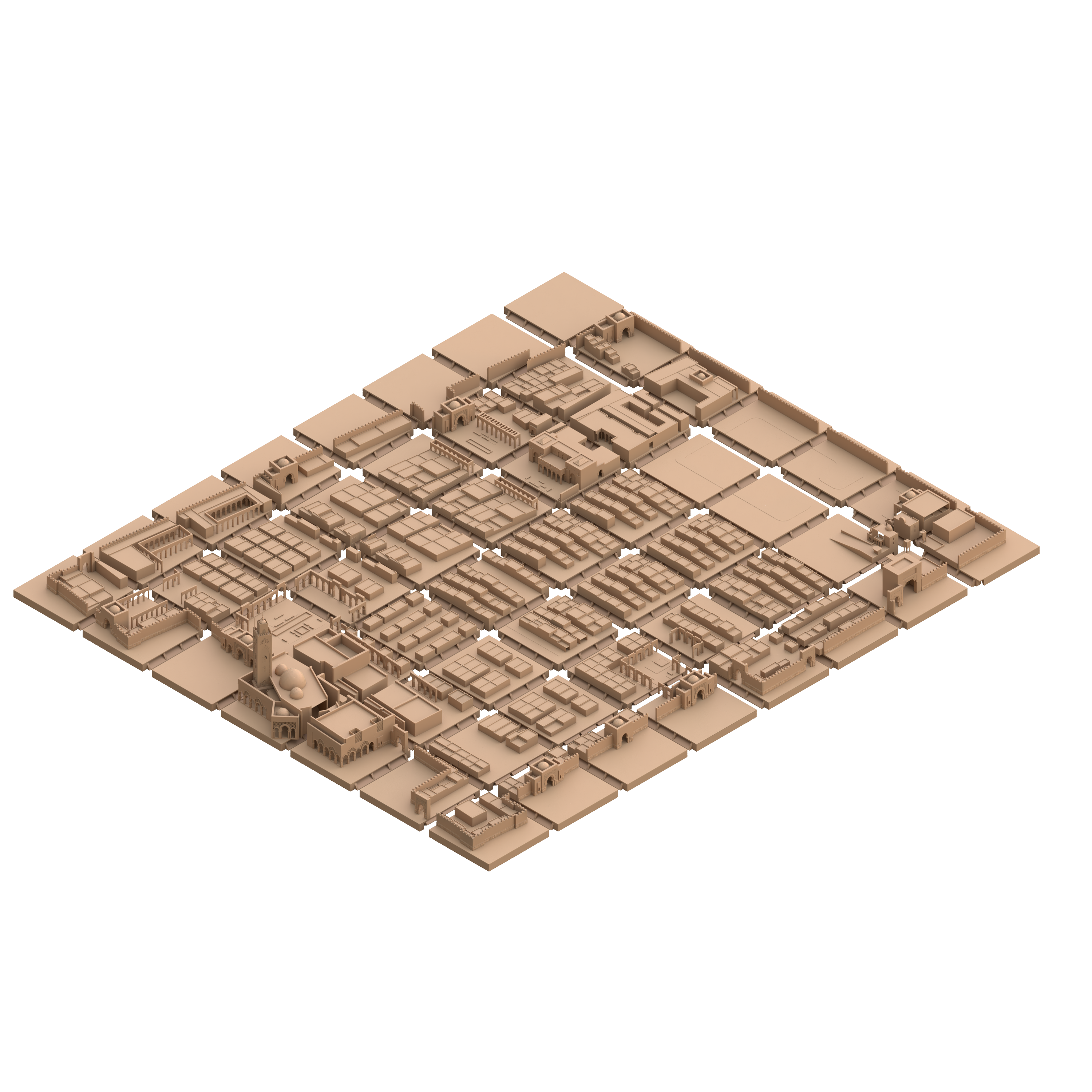
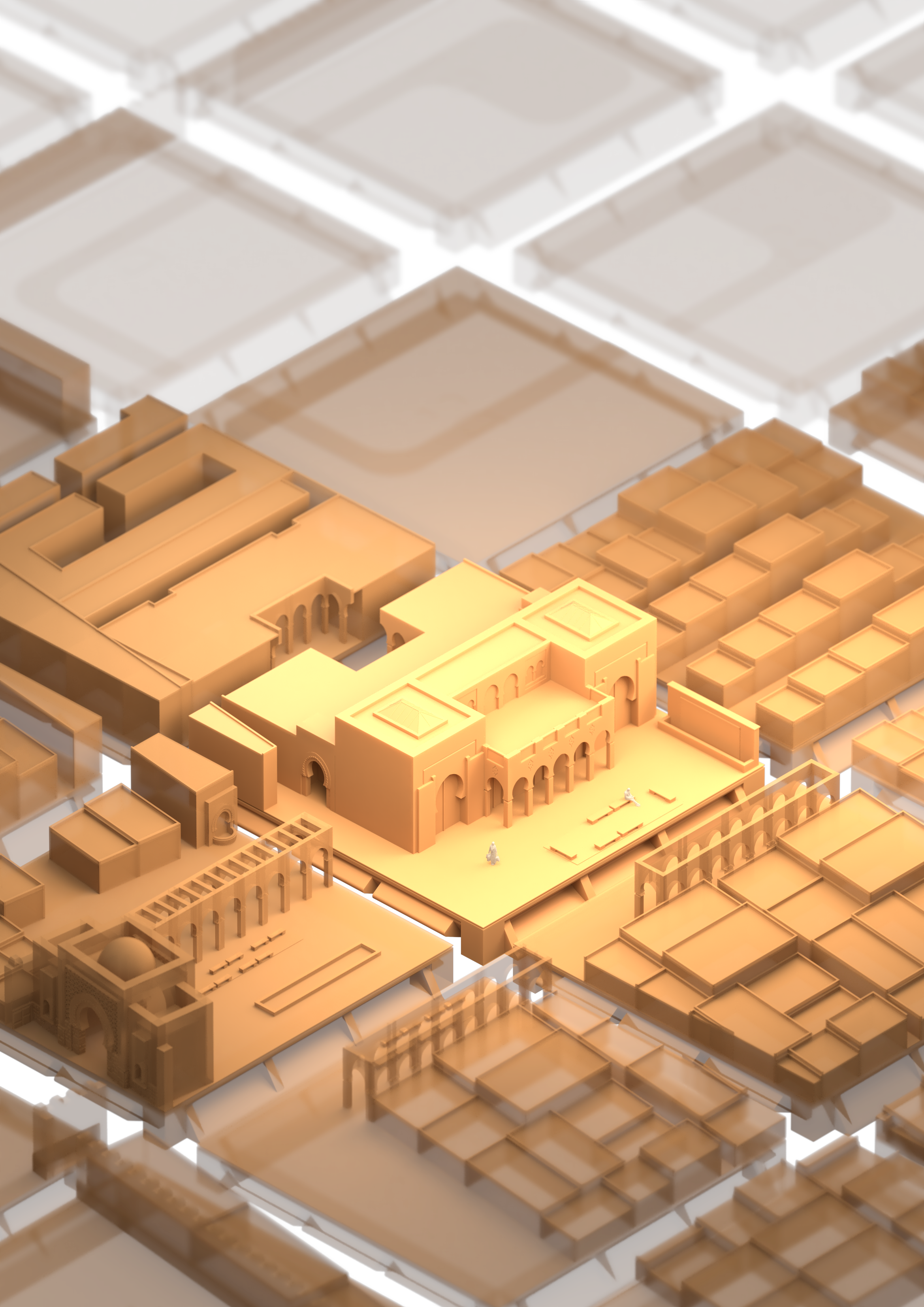
Souk El Had is a large-scale modular model of Agadir's entire market, the whole urban environment digitally reconstructed and fabricated through additive manufacturing.
Rather than one fixed object, it was conceived as a system: 56 interlocking modules that can be assembled, transported, exhibited and updated efficiently, a city you can take apart and put back together.
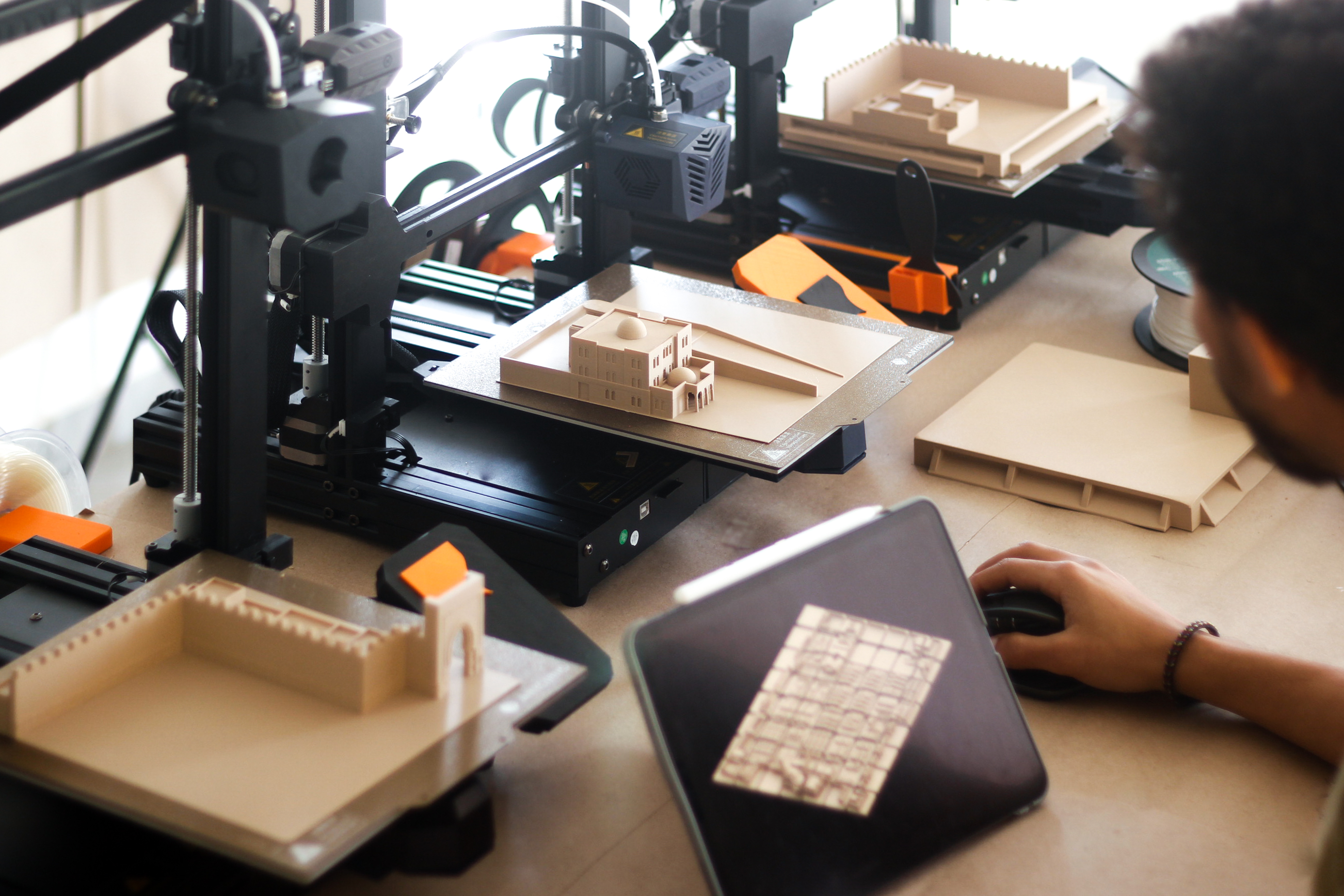
Every component was fabricated through additive manufacturing and optimised for precision, consistency and repeatability, from the smallest stall to the minaret of the Al Nour mosque at its heart.
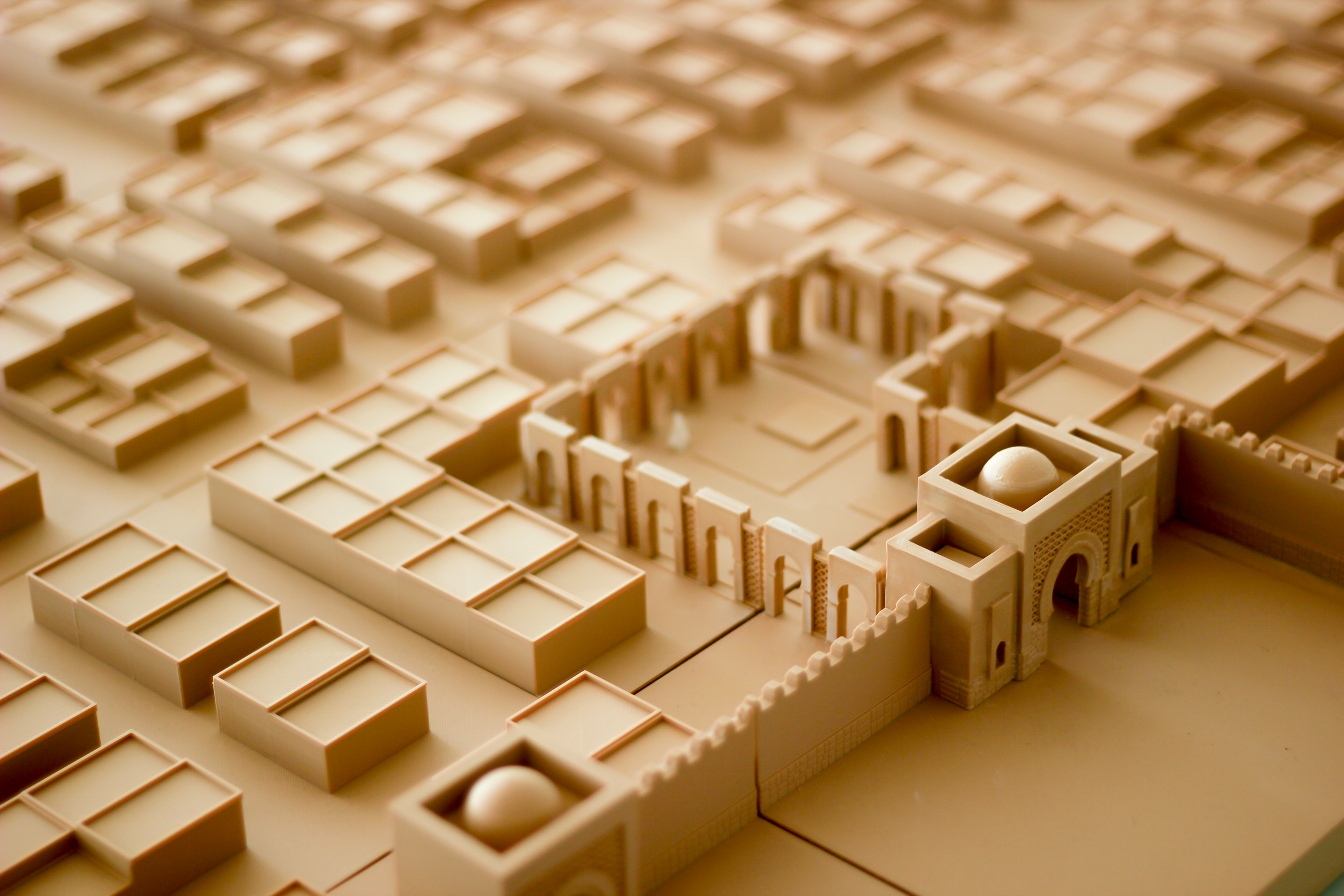
A complex urban environment translated into a detailed physical object, gates, ramparts, souks and courtyards, all at 1:250.
Rather than producing a single object, the model was divided into 56 independent modules with a custom interlocking system, assembled and disassembled without adhesives or permanent connections.
Fifty-six interlocking modules
The market was partitioned into 56 unique modules. Each lifts out on its own, so the model can grow, travel or be re-configured, a kit of parts rather than one fragile whole.
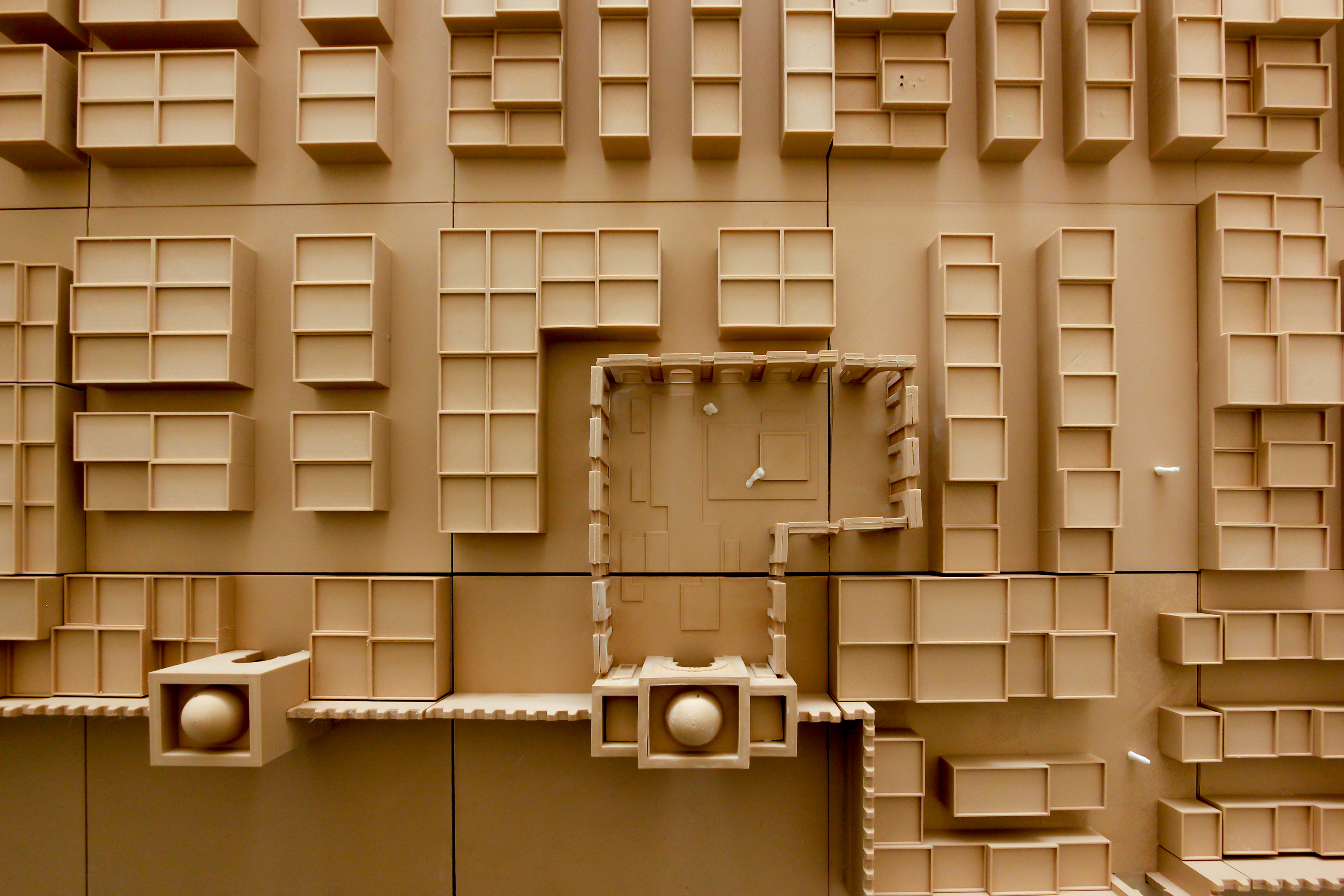
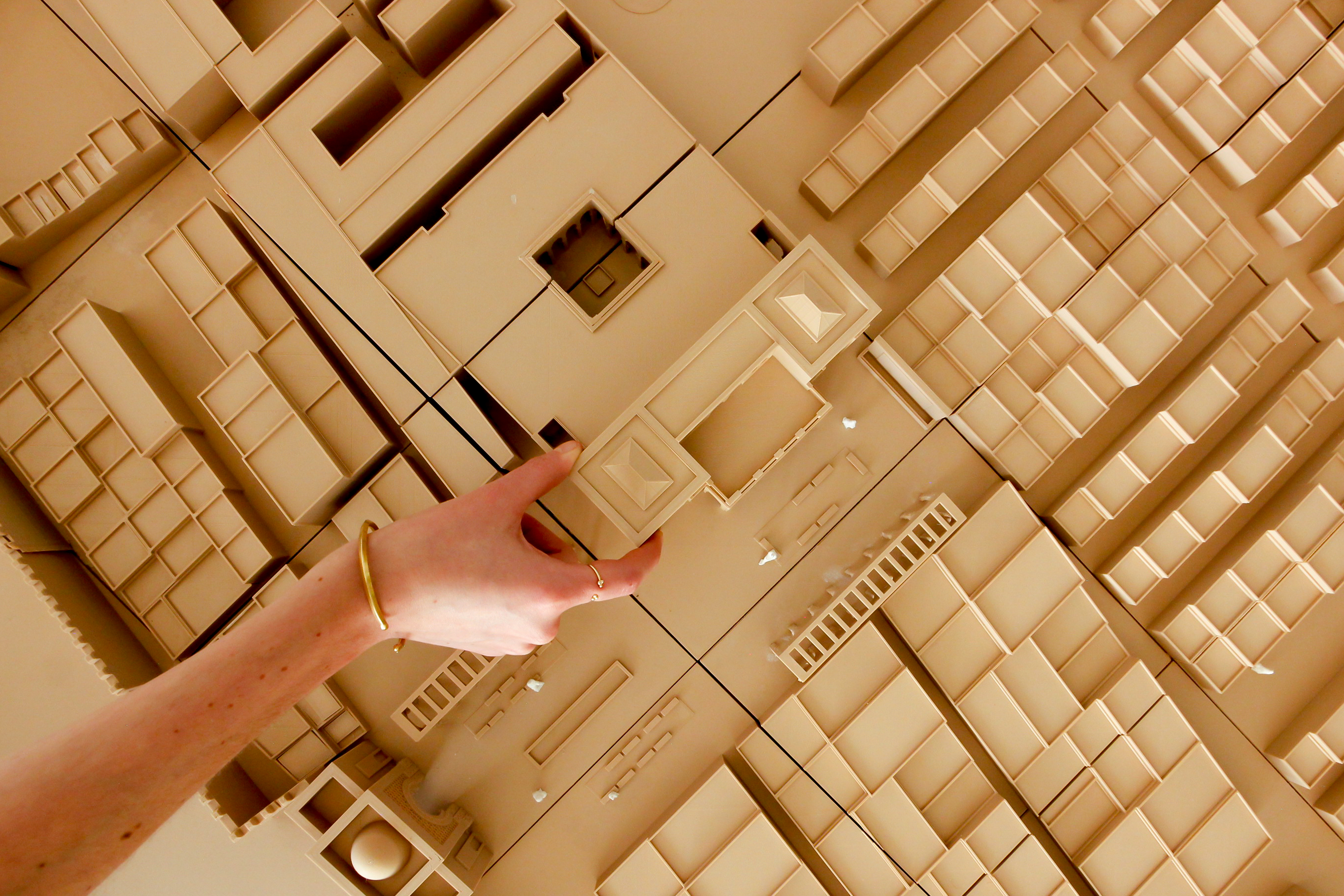
No glue, no tools
A custom interlocking system lets the modules click together and apart by hand, in minutes. Numbered underneath and matched to labelled boxes, they always return to their exact place in the grid.
Built to move
The complete model weighs under 15 kg and packs into custom boxes made for the project. Assembled, transported, exhibited, stored, then updated whenever the city does.
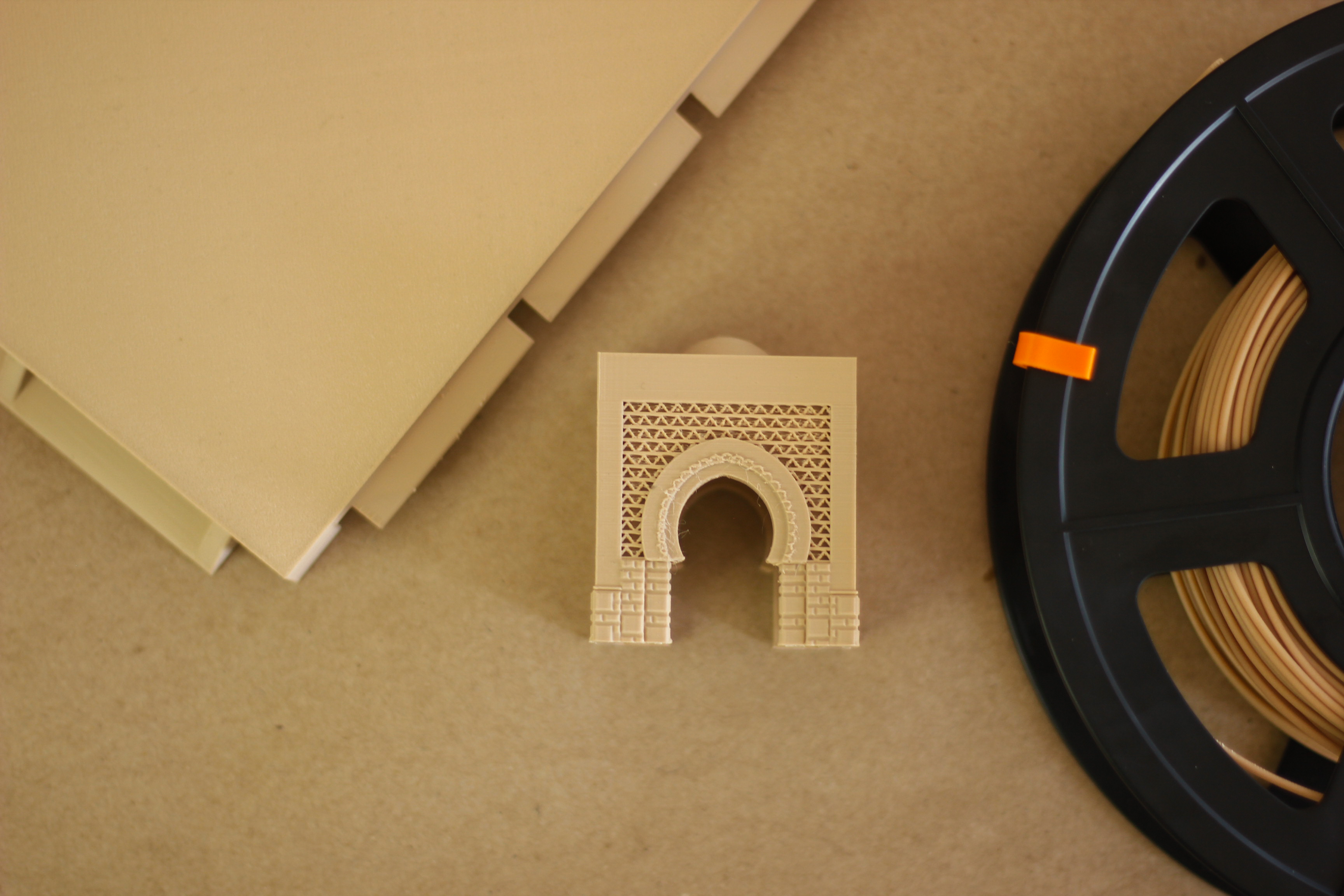
Crisp lines and impeccable finishes, down to the lattice.
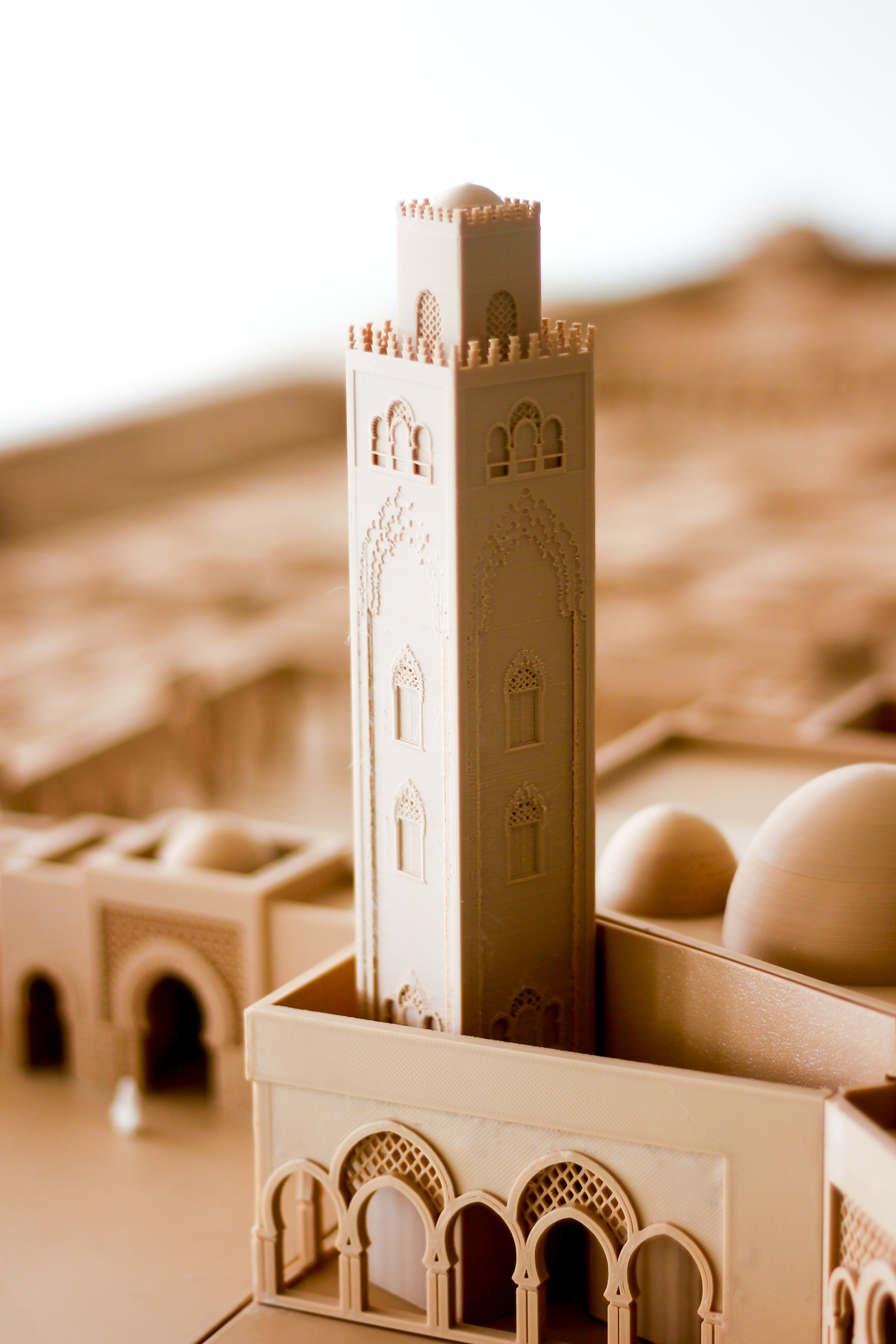
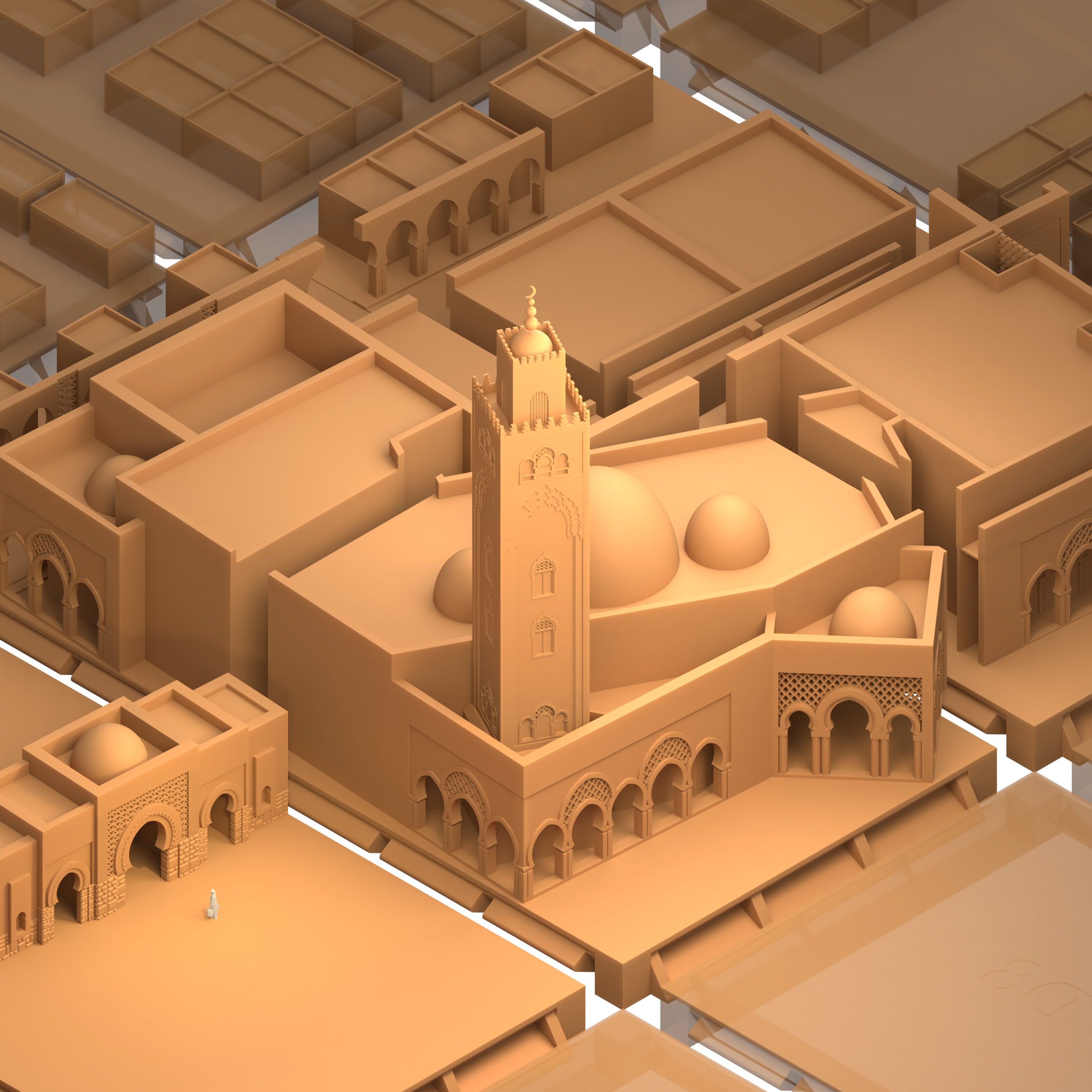
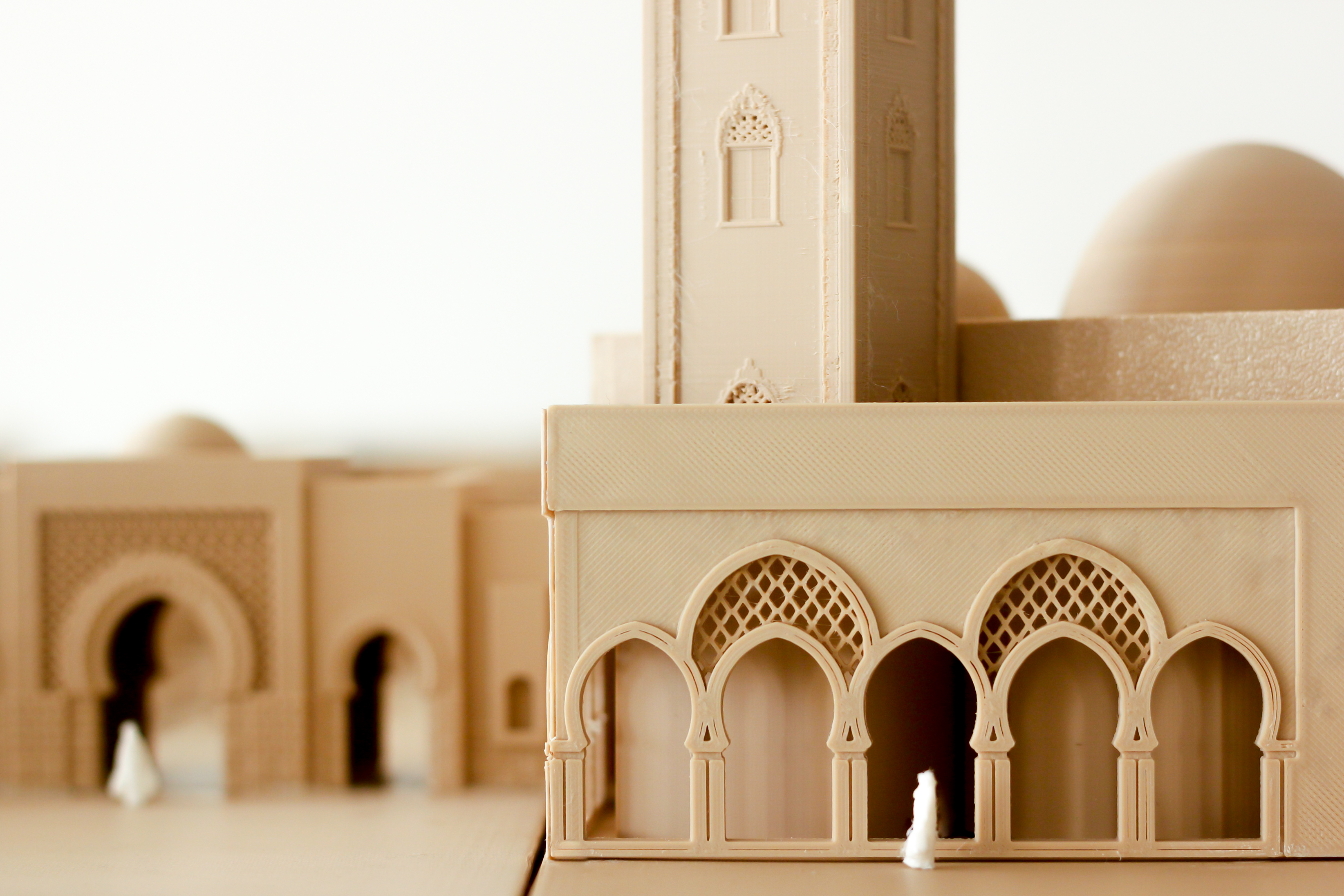
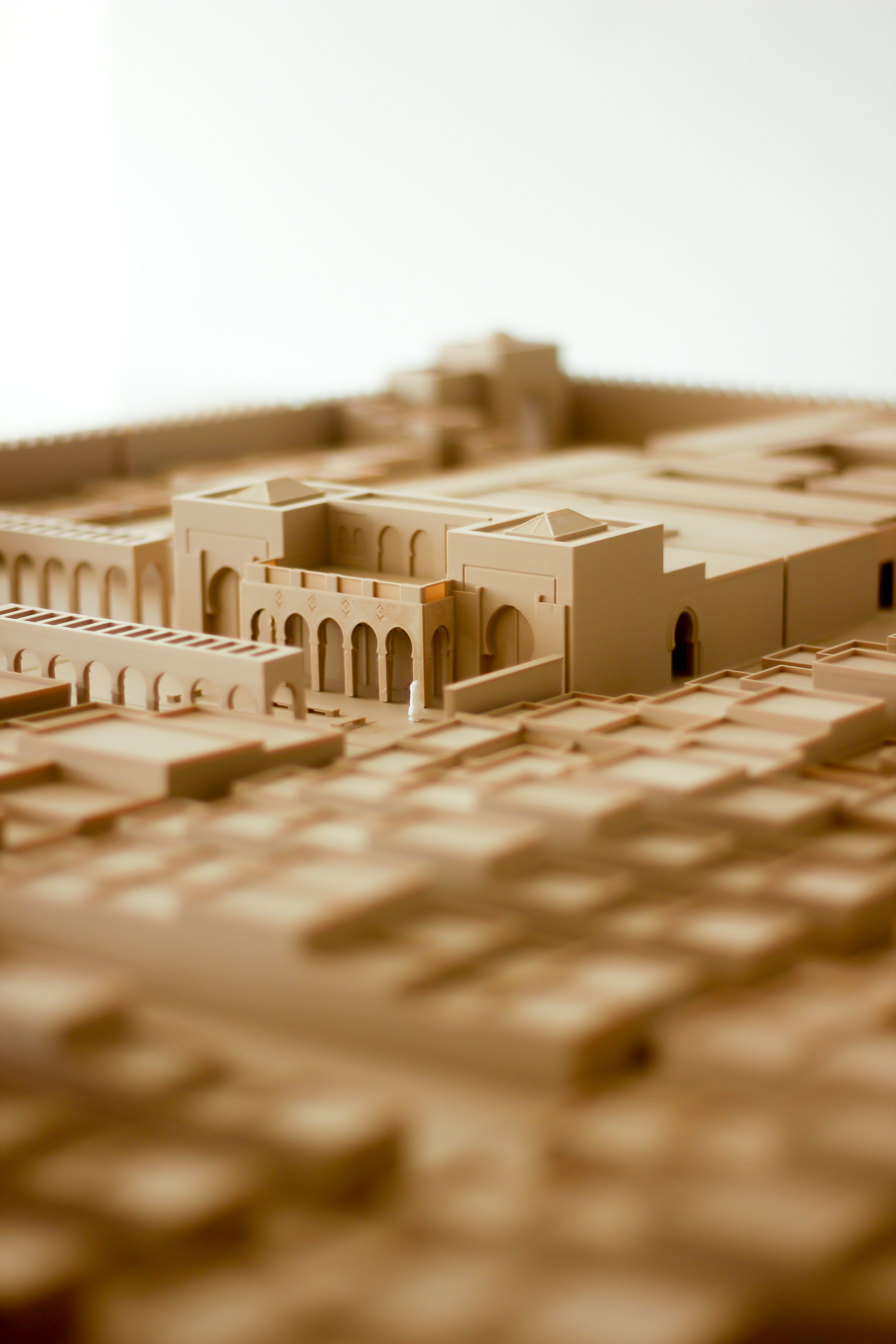
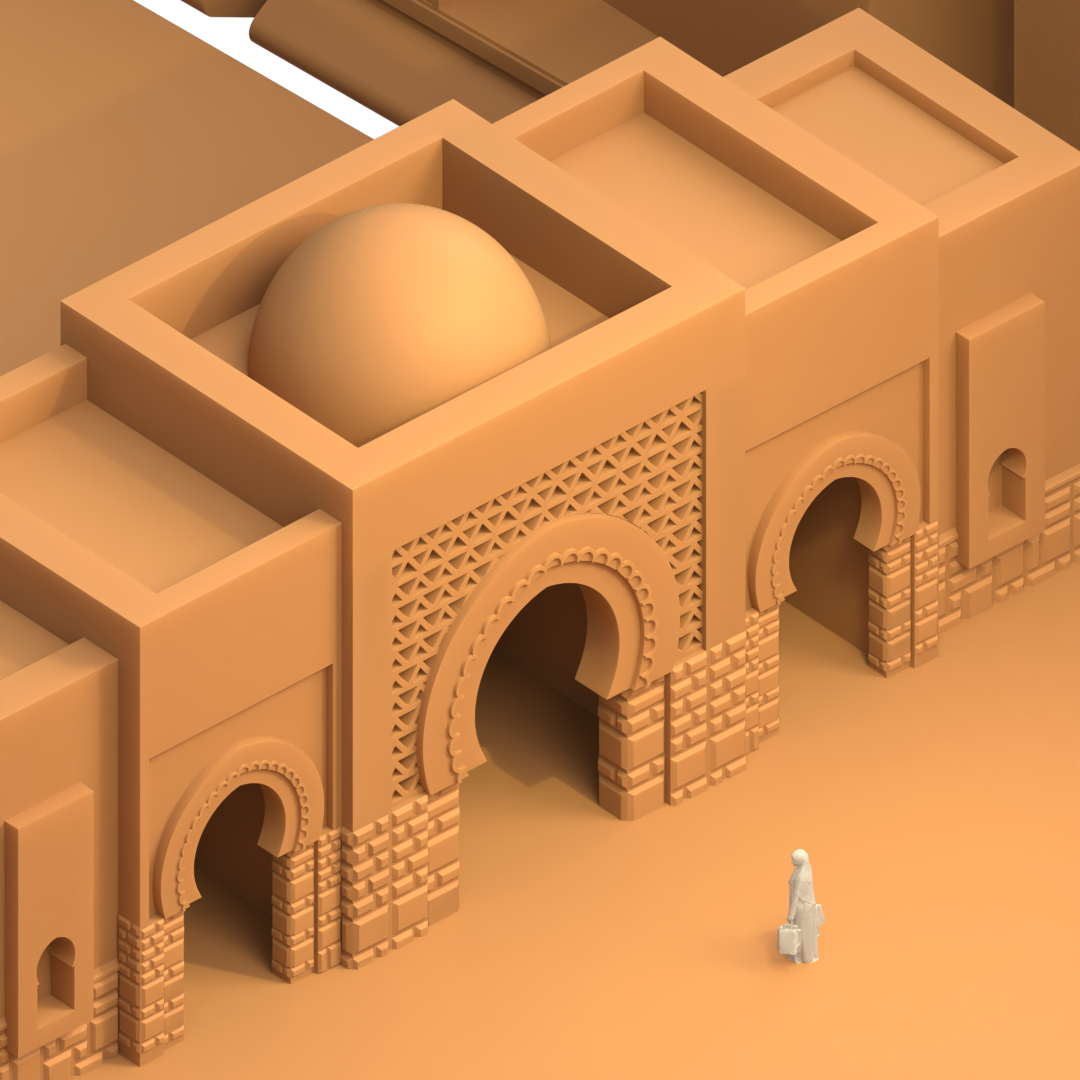
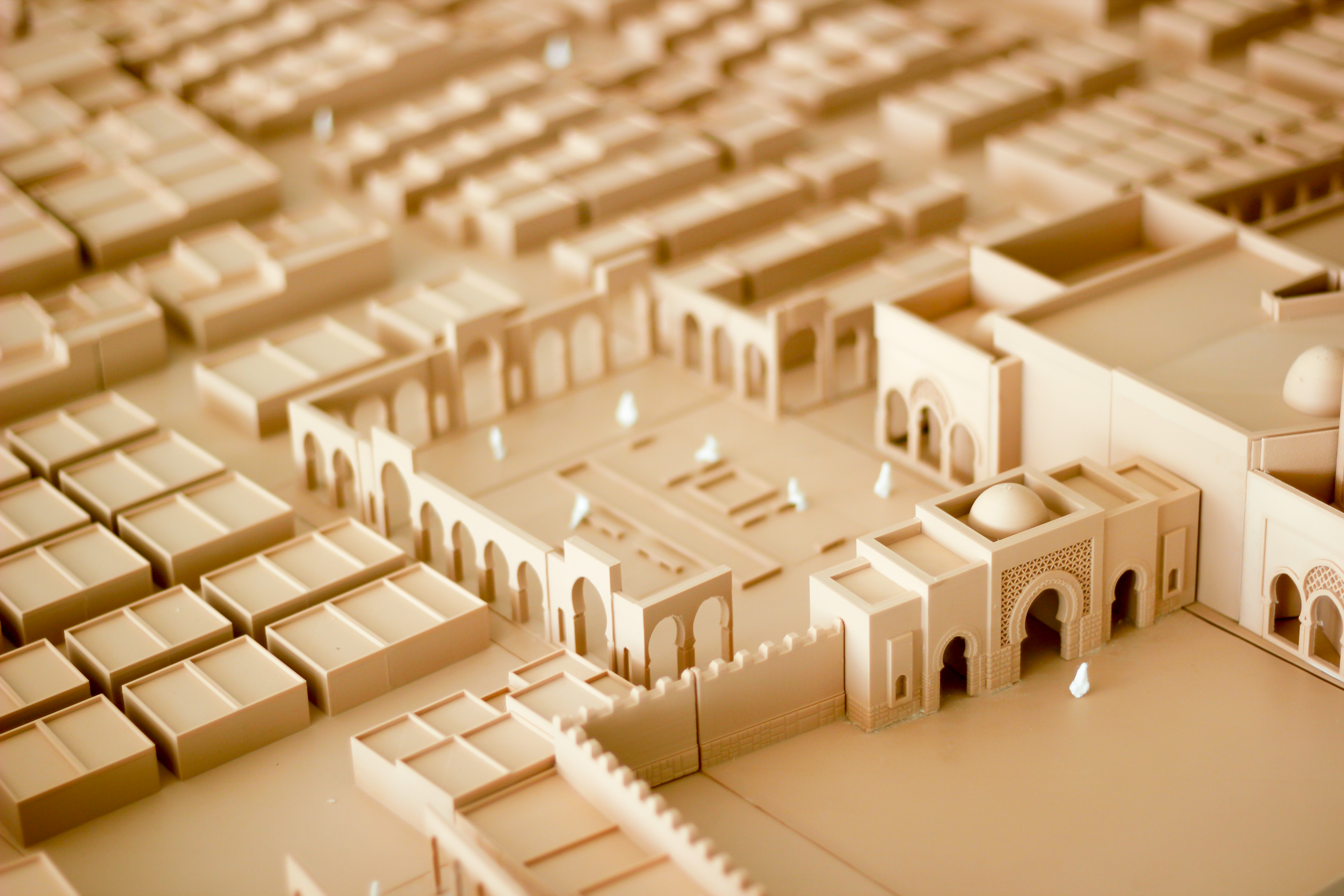
Printed in a wood-filled biocomposite, the warmth of wood, with the precision modelling demands.
The filament is made from sustainable, renewable matter, giving the whole market a single, quiet material identity.
In total: 2,100 hours of printing and roughly 4,500 metres of filament. A single honeycomb gate, 4.5 × 5 × 5 cm, takes 4 hours, 40 metres and 30 grams.